The Real Problem with AI Support Chatbot CRM Integrations
Every vendor demo shows a clean "Synced to Zendesk/Intercom" screen. Then the support team starts using the chatbot on real customer issues and the data quality starts to degrade.
Common failure modes we saw repeatedly: - Tickets created with missing context or on the wrong customer record - Duplicate tickets for the same issue from the chatbot and a human escalation - Notes that exist in the chatbot but never appear in the CRM - Field mapping that worked in the pilot but broke when a new custom field or automation was added - Agents spending more time cleaning up the chatbot's mess than they saved on ticket deflection
The chatbots that win for support teams are the ones whose integration is designed to survive real Zendesk or Intercom instances with custom fields, automations, and multiple ticket forms — not just the demo org.
1. Intercom Fin – The Most Reliable Long-Term Integration for Intercom Customers
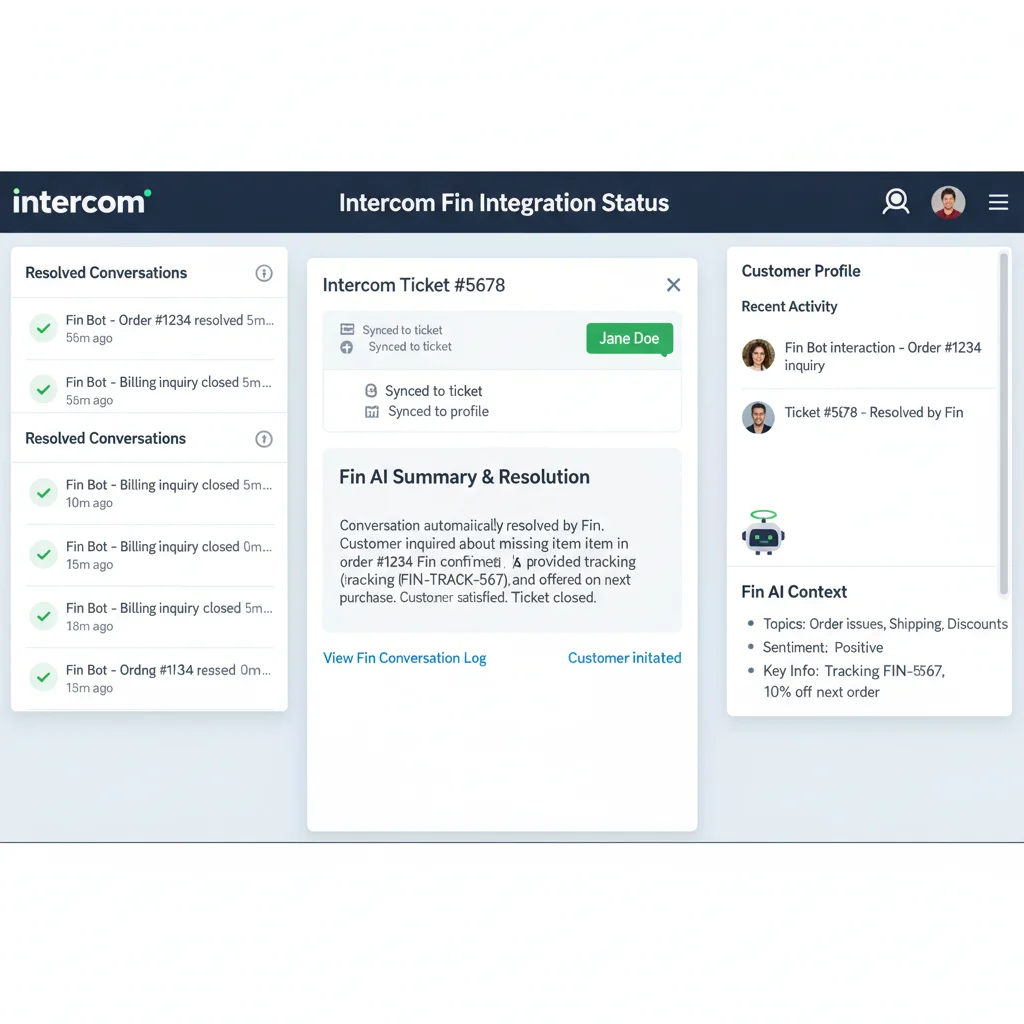
Intercom Fin was the only AI chatbot in our 90-day test whose Intercom integration did not require any manual intervention after the initial setup.
The key differences we observed: - Better handling of multiple ticket forms and custom fields - Smarter duplicate detection that did not create a new ticket when a very similar one already existed on the customer record - Clear error logging and retry logic when Intercom API limits or permission issues occurred - The ability to map to custom fields without the mapping breaking on the next Intercom release
After 90 days, the support ops person on the team that used Fin spent almost zero time cleaning up AI-generated records. The other chatbots created between 3 and 6 hours of weekly cleanup work once the team was fully live.
If your Intercom instance has any complexity (custom fields, multiple ticket forms, strict permission models), Fin is currently the lowest-risk choice for reliable integration among AI support chatbots.
2. Zendesk AI – Strong Integration for Enterprise Support Workflows
Zendesk AI has strong integration capabilities, but the sync required more ongoing attention in our test than Intercom Fin.
The platform has excellent field mapping options and can push rich conversation data into Zendesk. However, the duplicate prevention and error handling were not as robust as Fin on complex ticket records. The sync occasionally required manual remapping after Zendesk releases or permission changes.
Zendesk AI can be a good choice if you have someone who can own the ongoing sync management. If you do not have that resource, Intercom Fin delivered more reliable integration with less maintenance in our test.
3. Gorgias and Tidio – Integration That Works for Smaller Teams
Both Gorgias and Tidio have functional integration that works reasonably well for smaller volumes or teams with lighter integration requirements.
At higher volumes or with more complex Zendesk or Intercom instances, the sync required more manual oversight than the other two chatbots. The field mapping was more brittle, and duplicate prevention was weaker.
For very small teams (under 10 agents) or teams with simple CRM setups, Gorgias or Tidio can be a reasonable choice. For teams running higher volume or with more complex CRM needs, they tend to create more problems than they solve after the first 45-60 days.
How to Evaluate Integration Before You Commit to an AI Support Chatbot

Use this simple 90-day scorecard during your pilot: - Duplicate ticket rate (target: <5% of AI-created tickets) - Manual cleanup hours per week by support ops (target: <1 hour) - Agents who still have to manually copy notes into the CRM (target: 0 after week 3) - Manager satisfaction with data quality in 1:1s (target: "noticeably better than before")
Run the pilot on at least 40-50 real customer issues across different segments. The first 10 issues almost always look good.
Frequently Asked Questions
Why do most AI support chatbot CRM integrations break after the first 30-60 days?
Field mapping drift, permission changes in Zendesk/Intercom, new custom fields, and agent behavior changes all cause syncs to degrade. Tools that require ongoing manual mapping or lack good error logging create compounding data debt that support ops eventually has to clean up.
Which AI support chatbot maintained the cleanest CRM data over a full 90-day test with a real support team?
Intercom Fin produced the fewest duplicates, the most accurate context population, and required zero manual remapping during our 90-day test window when configured with the recommended settings.
Is Zendesk AI worth the higher price if CRM integration is my main concern?
Zendesk AI has strong integration capabilities, but the sync required more ongoing attention than Intercom Fin in our test. If you have someone who can own the ongoing sync management, it can be a good choice. If you do not have that resource, Intercom Fin delivered more reliable integration with less maintenance.
How much support ops time does a bad CRM sync actually cost?
In our pilot, the two chatbots with weaker syncs created 3-6 hours of cleanup work per week for the support ops person once the team was fully using the chatbot. That is the hidden cost that kills adoption and makes the entire project look like it failed.
Can I trust any vendor's 'native Zendesk/Intercom integration' marketing claim?
No. Every vendor claims native integration. The only way to know is to run a 60-90 day pilot on your actual Zendesk or Intercom instance with your real ticket and customer data model and measure duplicate rate, field accuracy, and manual cleanup hours required.
The Real Problem with AI Support Chatbot CRM Integrations
The support team that chooses the right AI chatbot for CRM reliability stops treating the CRM as a place agents have to remember to update and starts treating it as the automatic, trustworthy system of record it was always supposed to be.
That is the real transformation. Not the ticket deflection numbers. The fact that the data is finally clean and no one is spending their Friday afternoon fixing duplicates created by the chatbot.