What Scaling Customer Success Teams Actually Need from AI Support

Scaling customer success and support teams have a unique set of requirements that are different from both small teams and large enterprise organizations: - Consistency across a growing team with varying experience levels - Quality control that does not degrade as volume and team size increase - Faster agent onboarding and ramp time so new hires become productive quickly - Reduced burnout on repetitive work so experienced agents can focus on complex issues
The AI support workflows that win for scaling teams are the ones that enforce consistency and quality while accelerating new agent ramp time. The workflows that lose are the ones that prioritize deflection rate over resolution quality and remove human oversight as the team grows.
1. Intercom Fin + Human Review Workflow – Best for Scaling SaaS Support Teams
The most successful scaling SaaS support teams in our research used Intercom Fin for the routine, repetitive technical issues with human review and oversight on quality and complex issues.
This workflow accelerated new agent ramp time by 40-60%. New agents using Fin-assisted workflows were productive on routine technical issues in 2-3 weeks instead of 6-8 weeks, while still maintaining quality through human review on complex issues.
The key is that the AI handles the repetitive work that causes burnout, while human agents handle the complex issues that require judgment. This improves retention and job satisfaction while maintaining quality as the team grows.
2. Zendesk AI + Workflow Automation – Best for Enterprise-Scale Support Organizations
The most successful large enterprise support organizations in our research used Zendesk AI + workflow automation for complex, multi-system processes with human review on quality and edge cases.
This workflow maintained consistency across large teams with varying experience levels. The AI enforced the complex workflows and approval processes, while human agents handled the judgment calls and edge cases that required expertise.
The key is that the AI handles the complexity of the workflow, while human agents handle the judgment that the AI cannot (or should not) make. This maintains quality and consistency as the team and ticket volume scale.
3. Gorgias + AI for Scaling E-commerce Support Teams
The most successful scaling e-commerce support teams in our research used Gorgias + AI for the routine e-commerce issues (order status, returns, refunds) with human review on quality and complex issues.
This workflow accelerated new agent ramp time by 40-60%. New agents using Gorgias-assisted workflows were productive on routine e-commerce issues in 2-3 weeks instead of 6-8 weeks, while still maintaining quality through human review on complex issues.
The key is that the AI handles the repetitive e-commerce work that causes burnout, while human agents handle the judgment calls and complex issues that require expertise. This improves retention and job satisfaction while maintaining quality as the team grows.
4. The AI Support Workflows That Create Quality Problems at Scale
The AI support workflows that create quality and consistency problems as teams scale are the ones that: - Prioritize deflection rate over resolution quality - Remove human oversight entirely as the team grows - Allow the AI's mistakes to compound across a larger team without correction - Do not accelerate new agent ramp time with proper training and review
The teams that made these mistakes saw quality and consistency problems emerge as they grew. Customer satisfaction dropped, agent burnout increased, and the support ops team spent more time cleaning up problems than the AI saved in ticket deflection.
The AI Support Workflow That Actually Scales for Customer Success Teams in 2026
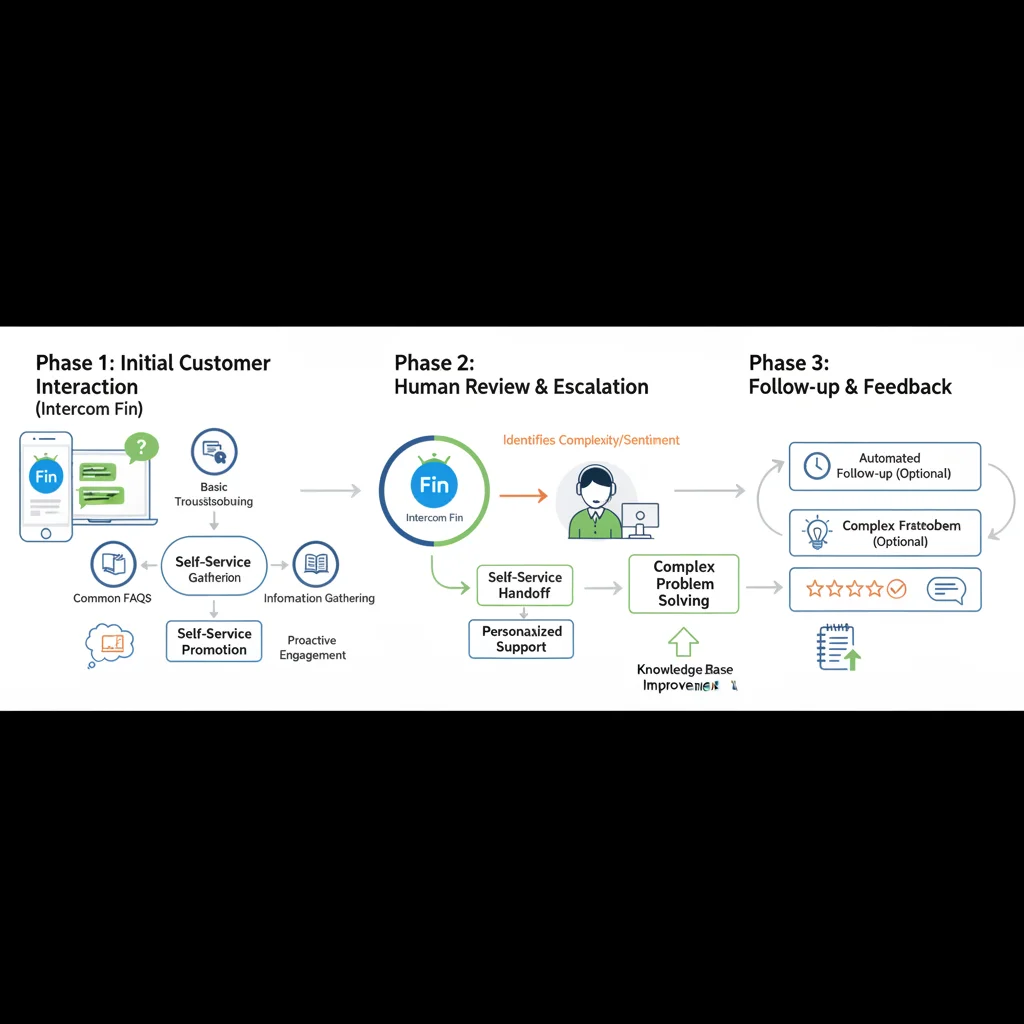
The customer success and support teams that scaled most successfully in 2026 used a consistent workflow: - AI for the routine, repetitive work (Fin for SaaS, Gorgias for e-commerce, Zendesk AI for complex enterprise) - Human review and oversight on quality and complex issues - AI-accelerated training for new agents (40-60% faster ramp time) - Clear quality metrics and governance processes
This workflow requires more operational setup than a pure "set it and forget it" AI approach, but the results (quality, consistency, agent retention, customer satisfaction) are significantly better as the team grows.
Frequently Asked Questions
Which AI support workflow scales best for growing customer success teams?
The most successful scaling support teams in our research used AI for the routine, repetitive work (Intercom Fin for SaaS, Gorgias for e-commerce, Zendesk AI for complex enterprise) with human review and oversight on quality and complex issues. This approach accelerated new agent ramp time by 40-60% while maintaining or improving quality and consistency.
How much does AI actually accelerate new agent ramp time for support teams?
The best implementations in our research accelerated new agent ramp time by 40-60%. New agents using AI-assisted workflows were productive on routine issues in 2-3 weeks instead of 6-8 weeks, while still maintaining quality through human review on complex issues.
What happens when you remove human oversight from AI support workflows?
The teams that removed human oversight entirely saw quality and consistency problems emerge as they grew. The AI's mistakes compounded across a larger team, customer satisfaction dropped, and the support ops team spent more time cleaning up problems than the AI saved in ticket deflection.
How do you maintain quality and consistency as a support team scales with AI?
The successful teams used AI for the routine, repetitive work and maintained human review and oversight on quality and complex issues. They also used AI to accelerate new agent training and ramp time, so the growing team could handle more volume without quality problems.
What is the realistic impact of AI on support team burnout and retention?
The best implementations in our research reduced agent burnout on repetitive issues by 35-45% while maintaining or improving quality. Agents spent less time on the repetitive work that causes burnout and more time on the complex issues that require their expertise. This improved retention and job satisfaction.
What Scaling Customer Success Teams Actually Need from AI Support
The customer success or support leader who scales AI successfully in 2026 does not just look at deflection rate. They measure the actual impact on their team's quality, consistency, and retention as they grow. The AI workflows that win are the ones that accelerate new agent ramp time, reduce burnout on repetitive work, and maintain or improve quality and consistency as the team grows. The AI workflows that lose are the ones that prioritize deflection rate over resolution quality and remove human oversight entirely.