A two-person SDR pod does not lose because Instantly scored below Smartlead in a four-column chart. It loses because domains die, HubSpot lists go stale, and nobody can pause a sequence on Friday. This page keeps the names from the instantly vs smartlead 2026 shortlist and treats them as senders inside a stack, not as a personality contest.
Read this after the five-person SDR plus CS hub. Lighter startup paths sit in the startup SDR outreach guide. CRM writeback is a separate ops job covered in Salesforce sync for tiny cold email teams. If you still need inbox and notes, those are separate jobs: support copilot and meeting notes into CRM.
What a sender is for
A cold email platform is a mailer with warmup, rotation, and throttling. It is not your CRM, not your enrichment file, and not your copy chief. Instantly, Smartlead, Lemlist, and Reply.io all send mail. They differ in how painful DNS, placement, and seat permissions feel at five users.
At two to five seats, the sender has three jobs only:
- Keep domains in primary placement while you send a modest daily volume.
- Give one non-founder person a clean way to pause, suppress, and rotate inboxes.
- Hand booked meetings to HubSpot or Salesforce as the same contact the sequence enrolled.
Everything else is optional theater. AI personalization, multichannel sequences, and pretty heatmaps only help if someone owns them every week. If your team cannot explain SPF, DKIM, and a dedicated tracking domain in one paragraph, do not run two senders “to compare.” You will burn both.
Treat Instantly and Smartlead as competing mailers with different ops gravity. Treat Lemlist and Reply.io as upgrades that demand staffing, not as free side grades on a working Instantly account.
90-day tests that beat a feature matrix
Vendor pages optimize for feature checkmarks. Tiny teams need a ninety-day pilot that survives real DNS, real lists, and real Friday handoffs. Run one sender through this protocol before you add a second logo.
Weeks 1–2: placement before volume
Stand up two domains, identical copy, and twenty to forty new contacts per domain per day. Check seed-list placement every morning. Kill a domain that hits spam twice. Do not “fix” a dying domain with more volume. Document who owns DNS changes and who can rotate inboxes without asking the founder in Slack.
Weeks 3–6: one positive-reply definition
Define a positive reply as a meeting booked or a clear next-step ask. Ignore open rate as a decision metric. If Instantly shows prettier dashboards but Smartlead keeps primary placement on your ESP mix, keep Smartlead. If Instantly stays in primary while Smartlead needs constant inbox babysitting you do not have, Instantly wins for you.
Track bounce quality separately from reply quality. Dirty files look like “tool problems” when the real issue is list source. Fix targeting before you swap platforms.
Weeks 7–12: CRM objects, not sync badges
Every booked meeting must exist as the same HubSpot or Salesforce contact the sequence enrolled. Duplicate leads mean the integration is theater. Sample twenty synced records after any permission or field-map change. If SDRs still paste notes by hand “just to be safe,” the connector already failed culturally.
A sender that places well but pollutes CRM will still waste a tiny team. Placement and CRM are different jobs; score both. Deep CRM scorecards live on the Salesforce sync page. This URL only asks whether the mailer you keep can pause cleanly and write honest activity.
Write the pilot exit criteria before week one. Examples that work at this size: kill the platform if primary placement stays under eighty percent for two consecutive weeks after DNS is correct; keep it if positive-reply definition stays stable and CRM duplicates stay under five percent of booked meetings. Without exit criteria, vendor demos expand forever and domains still die.
Instantly vs Smartlead vs Lemlist vs Reply.io at a glance
Use this table as a staffing filter, not a crown. “Best” means least weekly ops debt for a two-to-five person pod that already has a CRM and a list problem.
| Platform | Best fit at 2–5 seats | Ops gravity | Common failure mode |
|---|---|---|---|
| Instantly | One owner for warmup; modest daily caps; email-first outbound | Low to medium | Five SDRs invent campaigns with no naming scheme or shared suppression |
| Smartlead | Someone treats inboxes and placement like infrastructure | Medium to high | Bought for the sequence UI, then nobody watches blocklists |
| Lemlist | Staffed personalization workflows with review time | High on creative QA | Image and variable experiments without a reviewer; second sender risk |
| Reply.io | Real multichannel sequences with CRM object ownership | High on CRM discipline | Added as a fourth cold-email UI while LinkedIn work stays ad hoc |
Read left to right: fit, then ops cost, then how teams usually break it. If you cannot staff the ops gravity column, that row is not a upgrade for you—even if the marketing site looks sharper.
When Instantly is enough
Instantly is enough when one person owns warmup, you stay under a modest daily cap, and you do not need a full multichannel story. It fits founders who still touch outbound and SDRs who need a pause button more than a second analytics suite.
It fails when five SDRs each invent campaigns with no naming scheme and no shared suppression. It also fails when leadership demands “AI personalization at scale” without a reviewer. The tool will let you send; your domains will pay the invoice.
Operational tells that Instantly still fits:
- One shared campaign taxonomy and one suppression source of truth.
- Named inboxes with a written warmup ramp, not a shared pool nobody audits.
- HubSpot or Salesforce meeting objects that match enrollment without weekly dedupe theater.
Keep Instantly if Monday placement screenshots stay boring, bounce lists stay small, and a non-ops hire can stop a sequence in under five minutes. That boring outcome is the win for a tiny pod.
When Smartlead is worth the ops
Smartlead is worth it when you will actually manage placement and inboxes like infrastructure. High-volume rotation only helps if someone owns seed checks, blocklist response, and inbox health the way a small ops hire would own servers.
It is wasted if you wanted a prettier sequence builder and nobody watches blocklists. Buying Smartlead to “catch cadence” after Instantly placement died usually means you skipped DNS, list hygiene, or throttling. A second reputation will not fix a dirty file.
Operational tells that Smartlead earns its keep:
- A named human reviews seed placement and bounce classes every Monday.
- Inbox rotation rules are written down and changed on purpose, not mid-panic.
- Campaign attribution detail matters more than hands-off simplicity this quarter.
Prefer Smartlead when Instantly-looking dashboards hide weak primary placement on your ESP mix, and you already have a named owner for Monday infrastructure review. Prefer Instantly when that owner does not exist and will not exist this quarter.
Clear winner by team situation in 2026
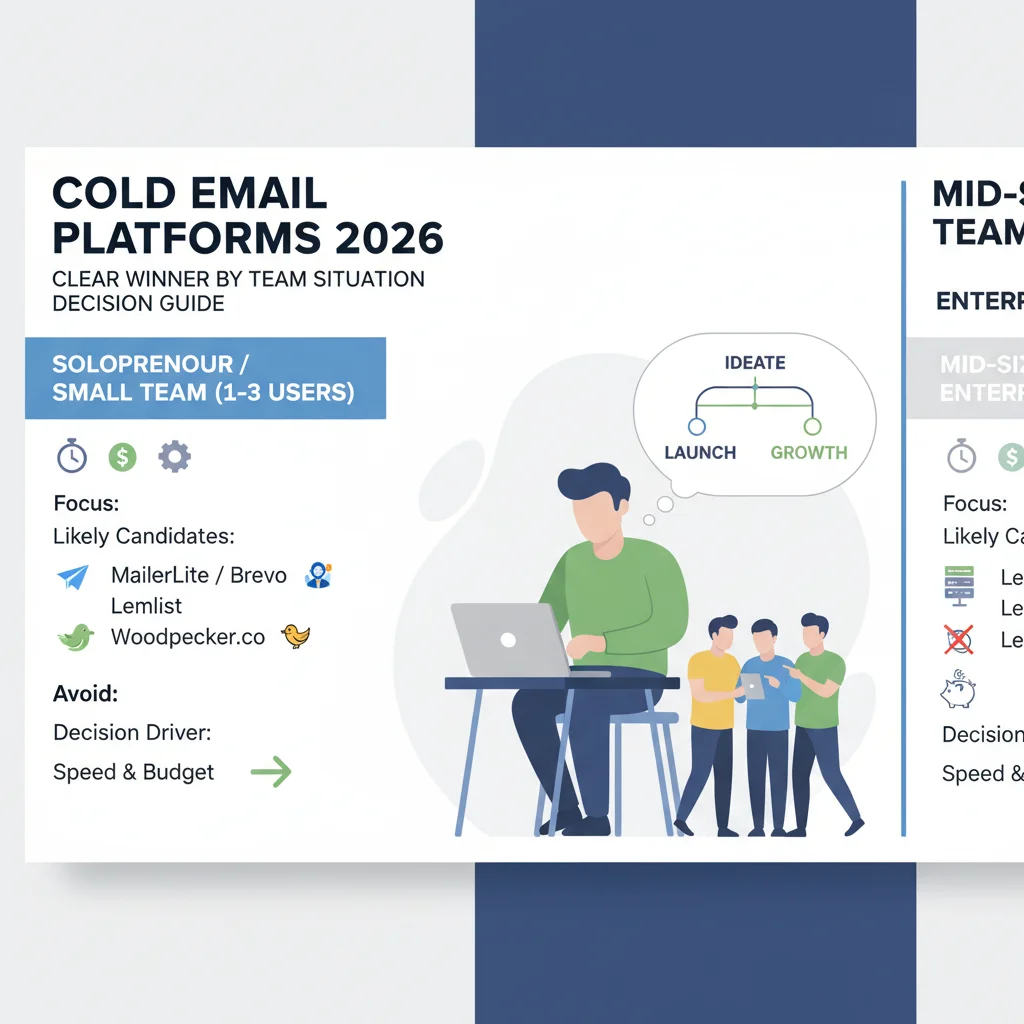
There is no universal 2026 winner. There is a winner for your headcount, volume, and ops honesty.
- Two people, email-only, founder still in the tools: Instantly-shaped stacks usually win. Keep one mailer, named inboxes, and a weekly pause drill.
- Three to five SDRs with a real ops owner: Smartlead can win if placement work is staffed. Instantly can still win if volume stays modest and naming discipline is strong.
- Creative personalization is a weekly job with a reviewer: Lemlist can join—as the primary sender, not as a second reputation beside Instantly.
- LinkedIn plus email is one CRM object with an owner: Reply.io can join. If LinkedIn work is still spreadsheet theater, skip it.
Lemlist’s personalization is a staffing decision: someone must review images and variables. Reply.io’s multichannel is a staffing decision: someone must live in the CRM. Adding either next to a working Instantly account usually doubles warmup, not revenue.
Do not catch cadence with a second mailer. A second platform is a second reputation to ruin. If placement is dying, fix DNS and lists. If replies are junk, fix targeting. The logo on the login page will not save a dirty file.
A weekly ops checklist
Monday: seed-list placement screenshot, bounce list, and a named owner for any domain under eighty percent primary. Tuesday: suppression file from HubSpot or Salesforce (unsubscribes, customers, open opportunities). Wednesday: one sequence pause drill so an SDR who is not the founder can stop mail without Slack archaeology. Thursday: three positive-reply call recordings, not open-rate theater. Friday: kill or keep the week’s copy—do not “let it run” because the tool has a pretty heatmap.
If Instantly makes the checklist easy and Smartlead does not, Instantly wins for you. If Smartlead keeps mail out of spam while Instantly looks nicer, Smartlead wins. Lemlist only joins this checklist if someone already spends hours on creative variables. Reply.io only joins if you truly send LinkedIn plus email as one object in the CRM.
Budget thirty focused minutes for the checklist. If it takes three hours, you do not have a tool problem—you have an ownership problem. Fix ownership before you evaluate another vendor.
What we will not do on this URL
We will not crown a universal 2026 winner for every company. We will not send you to image-gen or slide-deck articles from here. Those are other buyers. The keep cluster is sender, inbox, notes, and honest CRM writeback. Pick one sender that survives ninety days. Staff personalization or multichannel only when a human already owns that work.
Frequently Asked Questions
Which platform wins Instantly vs Smartlead 2026 for a tiny team?
The one your domains already warm on, and that a non-ops hire can pause without a Slack thread. Feature lists do not place mail.
Do we need Lemlist if we already send from Instantly?
Only for a specific personalization workflow you will staff. Two senders doubles warmup and blocklist risk.
What breaks first at this size?
DNS, warmup, and HubSpot field mapping—not the sequence editor.
Should SDRs own inboxes or a shared pool?
Named inboxes with documented warmup. Shared pools hide who burned the domain.
When is Reply.io worth it?
When you truly run multichannel sequences and someone owns the CRM objects. Not as a fourth cold-email UI.