The Core Trade-off in 2026: Native Workflow vs Standalone Power
Most professional teams already have a presentation tool they use every day. The real decision is not "which AI presentation tool is the best?" but "how much am I willing to change my existing workflow to get more AI capability?"
Staying inside Google Slides or PowerPoint with Plus AI or Copilot means lower friction and higher adoption, but you give up some of the creative speed and standalone design power of Gamma or Beautiful.ai.
Switching to a dedicated platform gives you more AI magic out of the box, but you pay in template migration, export cleanup, and team resistance.
In 2026, the teams that made the best decisions were the ones that were honest about which side of this trade-off they valued more.
1. Plus AI – Best When You Want AI Without Changing How You Work
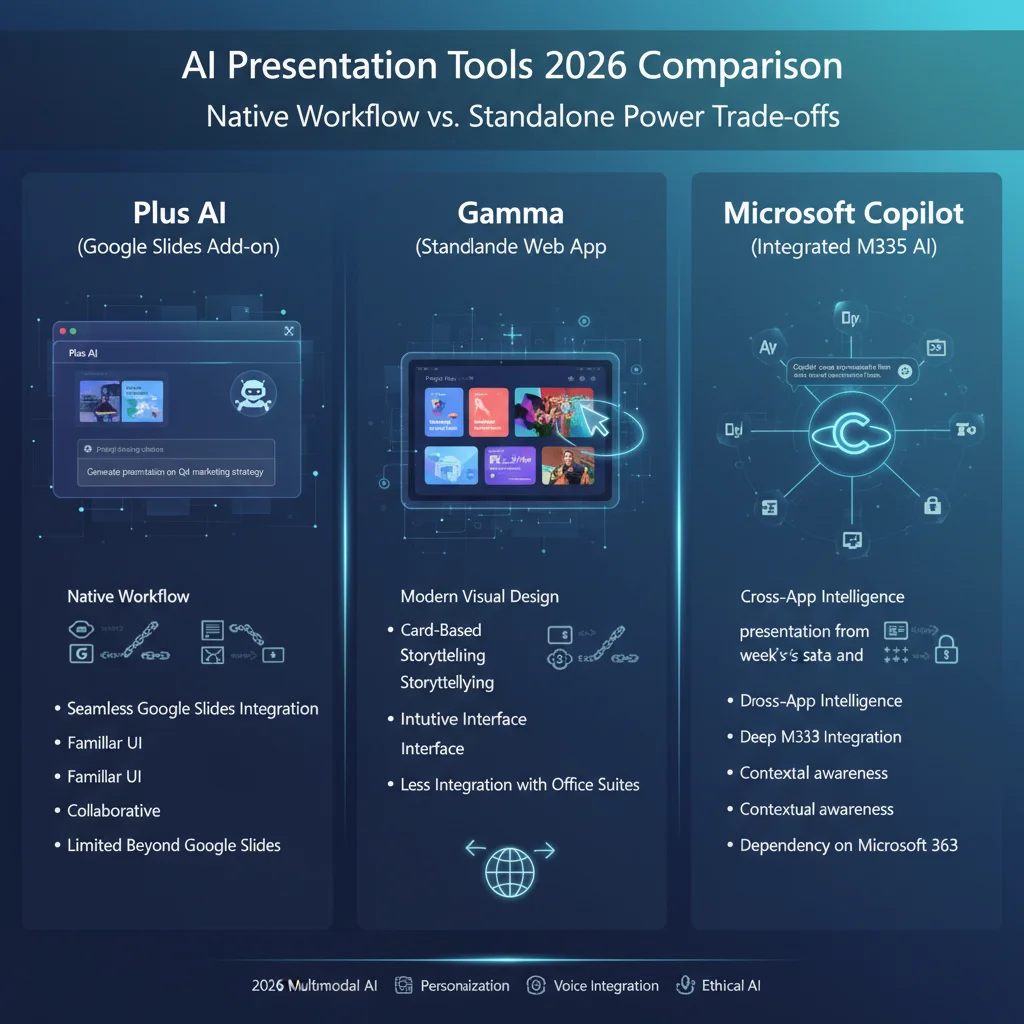
Plus AI is the default recommendation for any team that has meaningful investment in existing Slides or PPT workflows and does not want to change them.
The value is not in being the most advanced generator. It is in letting you generate, remix, and iterate while staying inside the exact file that already contains your approved master template, brand guidelines, and team collaboration history.
This is the difference between "we have to learn a new tool and fight with exports" and "the AI just works inside the file we already use every day."
For any organization with approved templates, brand compliance requirements, or more than 15-20 people who regularly create presentations, Plus AI (or Microsoft Copilot for fully Microsoft environments) is currently the lowest-risk, highest-adoption choice.
2. Microsoft Copilot in PowerPoint – Strong for Microsoft 365 Teams
For organizations that are deeply invested in Microsoft 365, Copilot in PowerPoint has improved enough that many teams now use it as their primary (or only) AI presentation tool.
The native experience, permission model, and integration with the rest of the Microsoft ecosystem are excellent. For internal updates and moderately complex decks, it is often genuinely good enough and included in the existing license.
Many Microsoft-heavy organizations have standardized on Copilot for day-to-day work and only add Plus AI or a standalone tool for the highest-stakes external decks where they want more creative generation power.
3. Gamma – Best When You Are Willing to Change the Workflow for Speed
Gamma's speed advantage is real and meaningful. For teams that create a lot of new decks from scratch and are willing to adapt their process, the time saved on the initial draft can be substantial.
The cost is the workflow change and the export cleanup tax. Teams that have tried to force Gamma output into existing corporate templates consistently report 15-40 minutes of manual formatting work per deck.
Gamma wins when the team is small, fast-moving, and values speed above process stability. It loses when the organization has mature templates and the cost of changing how everyone works is higher than the time saved.
Head-to-Head Comparison Table: Plus AI vs Gamma vs Copilot 2026
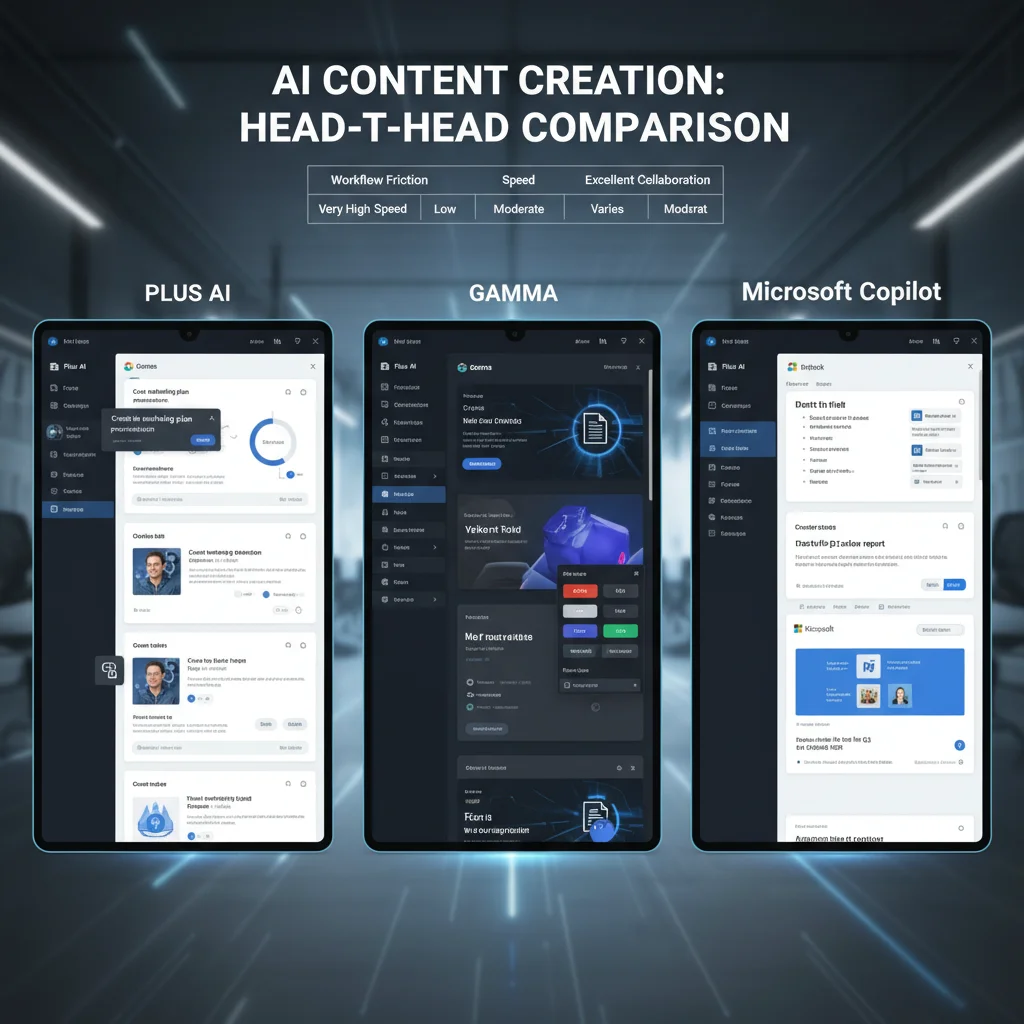
| Criteria | Plus AI | Gamma | Microsoft Copilot |
|---|---|---|---|
| Workflow friction | Lowest (stays in existing file) | Highest (new platform + export) | Lowest (native in PowerPoint) |
| First-draft speed | Good | Excellent | Good |
| Design quality and brand control | Excellent (uses your masters) | High | Good (improving) |
| Export and template compatibility | Excellent (native) | Fair (cleanup required) | Excellent (native) |
| Best for | Teams with approved templates | Speed-focused, adaptable teams | Microsoft 365 organizations |
Clear Recommendation by Team Situation in 2026
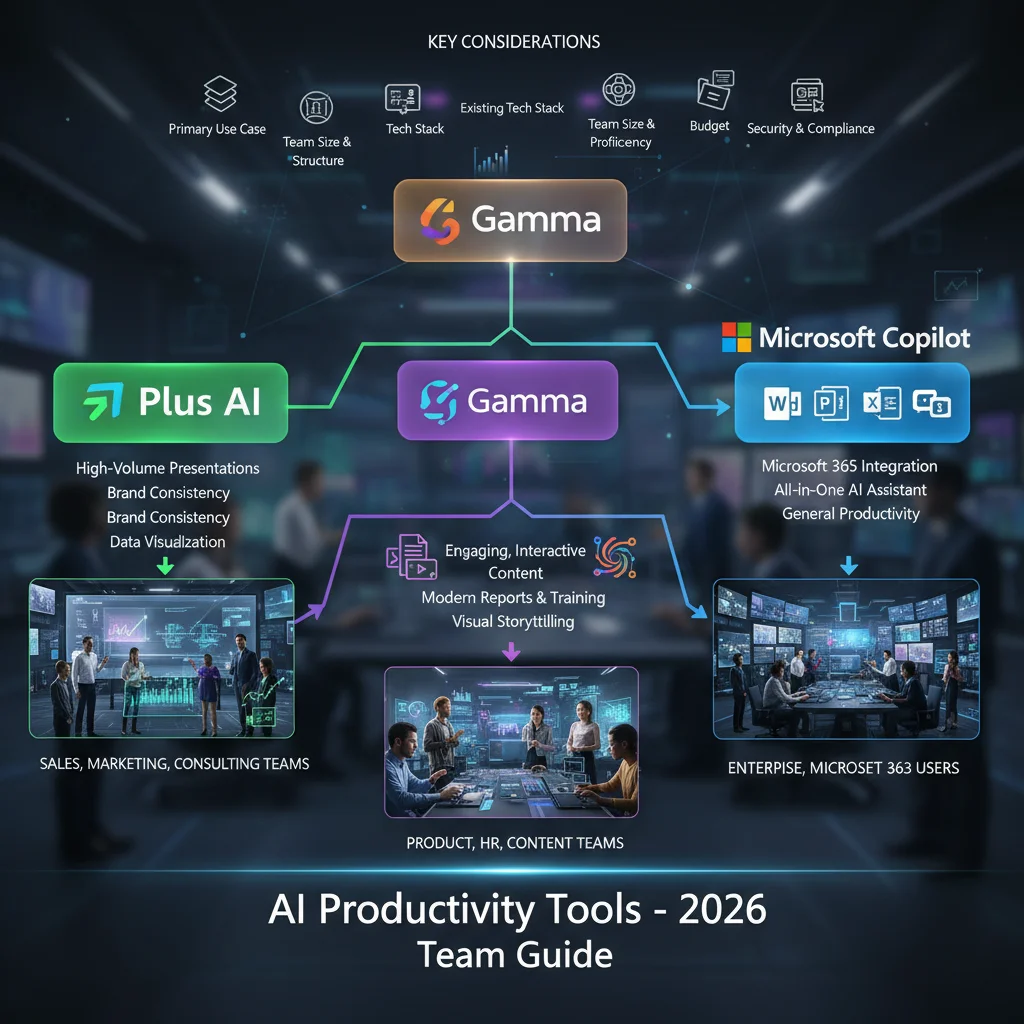
Plus AI (or Copilot) if you have approved templates, brand guidelines, or more than 15-20 people who regularly create presentations and you do not want to change how they work.
Gamma if you are a small, fast-moving team that values speed above all and is willing to adapt processes and accept some export cleanup.
Hybrid (Plus AI/Copilot as daily driver + Gamma for fastest first drafts) is the most common pattern among larger organizations that have tested everything.
Frequently Asked Questions
Is the native AI in Google Slides or PowerPoint good enough in 2026?
For many internal and moderately complex decks, yes. Microsoft Copilot has improved dramatically. For high-stakes external decks or teams that want more creative generation and remixing power, most organizations still layer Plus AI on top of the native experience.
When is it worth switching to a standalone tool like Gamma even if it means changing workflows?
For small, fast-moving teams that create a lot of new decks from scratch and are willing to adapt their process. For larger organizations with approved templates and mature collaboration workflows, the adoption cost of a full platform change is usually higher than the benefit.
Do most teams end up using both a native tool and a standalone tool?
Yes. The most common 2026 pattern is Plus AI or Copilot as the daily driver inside the approved workflow, with Gamma used for the fastest first drafts when a completely new deck is needed on a tight timeline.
How much time does the native integration actually save compared to export + cleanup?
In our tests, teams using Plus AI or Copilot inside their existing templates spent 15-40 minutes less per deck on formatting fights compared to teams that generated in Gamma or Beautiful.ai and then tried to force the output into corporate masters.
Will the native AI experiences in Slides and PowerPoint eventually make standalone tools unnecessary?
They will continue to close the gap for day-to-day internal use. For high-stakes external decks, creative generation, and teams that want maximum AI power without process change, the standalone tools (especially when used in hybrid workflows) will likely remain relevant for the foreseeable future.
The Core Trade-off in 2026: Native Workflow vs Standalone Power
The teams that win with AI presentation tools in 2026 are the ones that were honest about how much they valued staying inside their existing workflow versus getting the maximum AI capability. There is no universally correct answer — only the answer that matches your team's actual situation and tolerance for change.
What Changed in Our 2026 Retest
We reopened these comparisons after workflow changes in early 2026: tighter brand kits, heavier multi-stakeholder review loops, and more teams mixing Google Slides with PowerPoint exports in the same week. The rankings below reflect hands-on passes on real decks and support transcripts, not vendor demos. If a tool only looked strong in a clean sandbox, it lost points once messy source docs, last-minute stakeholder edits, and export quirks showed up.
Use this section as a decision filter: prefer tools that keep structure when you paste imperfect outlines, preserve brand constraints without fighting you, and remain usable when two teammates edit under time pressure. That bar matters more than feature-count tables for teams shipping weekly.
Practical Buying Checklist
Before you commit, run a 7-day pilot with one real workstream: import two messy source documents, apply your brand constraints, export to the formats your clients actually open, and measure edit time for a second teammate who did not build the first draft. Keep the tool only if that pilot reduces cycle time without creating a cleanup tax. Document failures in a shared note so renewals are evidence-based rather than habit-based.
Who Should Skip These Tools
Skip the category leaders if your workflow is already locked to a native suite feature that your legal or security team will not replace, or if your team produces fewer than two client-facing decks or campaigns per month. In those cases the switching cost exceeds the quality gain. Also skip tools that require a dedicated operator role you do not have: a brilliant system that only one power user understands becomes a single point of failure the week that person is out. Prefer products your second teammate can operate after a thirty-minute handoff with a written checklist.
Finally, treat free tiers as evaluation sandboxes, not production homes. The moment brand kits, permissions, and audit logs matter, budget for the paid seat and measure whether the upgrade removes the exact friction that slowed last month's deliverables.