A five-person sales plus CS pod does not need another Fireflies-versus-Otter-versus-Notta bake-off. It needs call memory that survives the week a closer opens an opportunity and a CSM renews an account. If you are hunting for the best ai meeting assistant 2026, judge CRM writeback, weekly cleanup, and one-bot ownership—not transcription cosmetics on a demo call.
Start from the five-person SDR plus CS stack hub. Sales writeback depth lives on the CRM writeback for sales call notes page. Connector hygiene is covered in Salesforce and HubSpot meeting sync. Built-in Zoom or Teams AI versus a paid bot is a separate decision on built-in versus dedicated notetaker. CS renewal context belongs with CS call notes and support handoff. This URL is the buying-frame rewrite: how to score the meeting layer without a logo zoo.
What “best” actually means for a five-person ops pod
Vendor pages still define “best” as speaker labels, accent handling, and a feature grid. Those matter only after write paths stay honest. For a tiny ops pod, best means three jobs that still work in month three:
- Identity: the person on the calendar matches the Salesforce or HubSpot contact a closer or CSM opens later.
- Activity: notes, tasks, and next steps land on the opportunity or account a manager reviews in 1:1s.
- Ownership: work does not orphan onto a shared integration user when an SDR leaves.
Everything else—topic clouds, clip playlists, AI chat over the archive—is optional until those three jobs are boring. If managers still paste summaries into Slack “to be safe,” you do not have an assistant. You have a second inbox.
Budget cleanup time explicitly. A tool that saves twenty minutes of typing but costs three hours of CRM hygiene a week is a loss for a five-person company. Cap weekly babysitting at under one focused hour for whoever owns RevOps (often the founder). That budget is part of the purchase, not an afterthought.
Name one human owner on day one. Shared Slack channels do not pause bots, remap fields, or catch silent write failures. The best AI meeting assistant 2026 purchase includes a named person who can disable the bot without opening a ticket with the vendor.
Failure modes the logo zoo never measures
Week one always looks fine. Ten synced notes have owners. Leadership screenshots the timeline and calls the pilot a win. Week three is where tiny pods get hurt:
- Duplicate tasks from two calendar bots on the same meeting.
- Notes on the wrong opportunity because matching used email alone and ignored account hierarchy.
- Green “synced” badges while permission changes blocked writes to required fields.
- Field maps that worked until a validation rule or package update rejected writes silently.
- Reps and CSMs copying summaries into Slack, which means the sync already failed culturally.
Transcription accuracy can still look strong while CRM truth collapses. Accent scoreboards do not catch that. Neither does a four-logo ranking table that never mentions cleanup hours.
Outbound deliverability can be healthy while meeting writeback is a mess. Those are different jobs. Fix sender sync on the cold-email integration pages; fix call memory here and on the sales writeback sibling. Do not buy a second meeting bot “to compare accuracy” while duplicates already clutter the pipeline.
A 90-day meeting-assistant ops scorecard
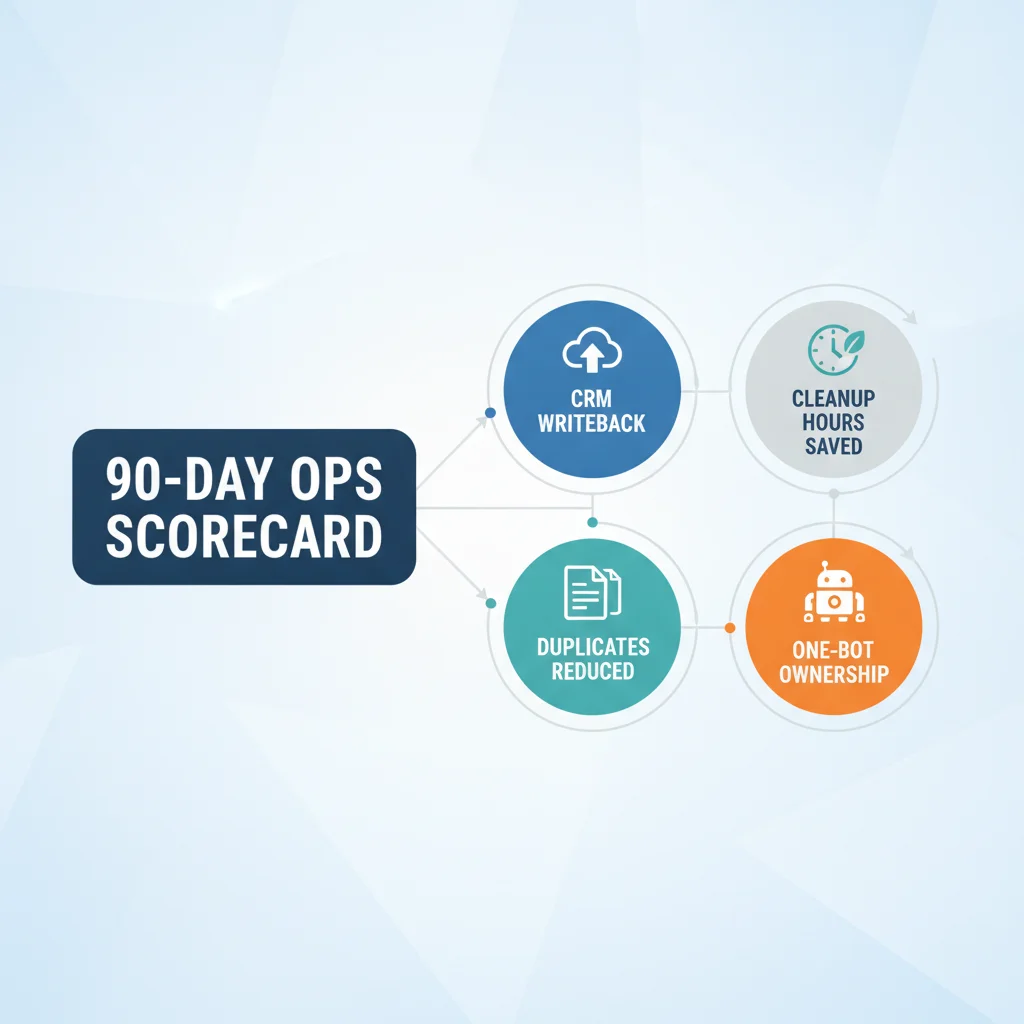
Run the pilot on your real org, not a sandbox with three fields. Capture at least forty to fifty live calls across discovery, demo, close, and at least a handful of CS check-ins or QBRs. Score weekly:
- Duplicate task rate under five percent of integration-created tasks.
- Manual cleanup under one hour per week for the named owner.
- Zero people still pasting notes into the CRM or Slack after week three.
- Managers able to coach from opportunity or account activity without opening the notetaker.
- After any permission, validation, or package change: sample twenty synced records within forty-eight hours.
Kill the pilot early if duplicates climb and nobody can pause the bot without Slack archaeology. A connector you cannot stop is infrastructure you do not control.
Also define one positive path: when a next meeting books, the same contact and opportunity (or account) the note used must be the ones on the invite. Duplicate leads after a booked follow-up means matching is theater—even if the transcript looks perfect.
This scorecard is how you decide the best AI meeting assistant 2026 for your pod. Feature matrices are marketing. Ninety-day hygiene is the purchase.
How to pick one bot without a four-way ranking table
You do not need a personality contest between Fireflies, Otter, Notta, and MeetGeek on this URL. You need one bot whose write path a non-specialist can babysit. Prefer the platform that:
- Logs failed writes with the CRM error, not a green badge that lied.
- Lets you limit scopes to Contact, Lead, Task, Note, and the Opportunity or Account fields you actually use.
- Survives a permission tighten without requiring a full remap the next morning.
- Has a clear pause path a non-founder can run in under five minutes.
Fireflies-shaped stacks often win for tiny pods when setup is careful and ops bandwidth is low: clearer retries, searchable libraries, and less weekly babysitting in our experience. Otter-shaped stacks can be fine when transcription comfort matters more than deep CRM objects and someone still owns paste-back risk. Lighter bots are usually enough only for light HubSpot setups or very small volume—brittleness shows up once custom fields and multiple pipelines appear.
If almost every call already lives inside Zoom or Teams and CRM writeback can stay light, start with the built-in path before you pay for a second logo. The moment partners live on Meet while you live on Zoom, or notes must land on opportunities without paste-back, dedicated tools pull ahead. Do not run built-in and dedicated bots on the same calendar “to compare.”
If you already burn cycles on outbound deliverability, do not add a second meeting bot for accuracy theater. Two bots double invite noise and double writeback clutter. Pick one, run the scorecard, then keep or replace.
Weekly ownership so the meeting layer stays boring
Monday: open the sync error log. Screenshot any permission or field failures. Assign the named owner; do not leave it in a shared channel hope pile.
Tuesday: sample ten opportunities or accounts. Confirm owners, due dates, and that coaching or renewal fields a manager needs are on the record—not only in the notetaker.
Wednesday: pause drill. A non-founder must disable the bot for one recurring meeting and confirm new notes stop appearing within an hour.
Thursday: check calendar invite hygiene. One bot per meeting. No dual bots “for redundancy.”
Friday: decide keep or kill for the week’s mapping changes. Do not “let it run” because the vendor dashboard looks green.
If this checklist takes more than thirty focused minutes, the integration is too expensive for your headcount—even if the vendor calls it conversation intelligence.
Where this sits next to sales writeback, sync, and CS handoff
Upstream, cold email still has to land without wrecking domains. Downstream, support copilots still have to hand off without losing context—see the Gorgias versus Intercom Fin handoff page. Meeting memory is the middle layer: what the prospect said, what we promised, and who owns the next step across sales and CS.
Use the sales writeback page when the pain is coaching fields on opportunities. Use the Salesforce sync page when the pain is connector reliability. Use the CS handoff page when renewal notes never reach support. Use this page when someone asks for the best AI meeting assistant 2026 without another brand leaderboard.
Frequently Asked Questions
What is the best AI meeting assistant in 2026 for a five-person team?
The one that keeps CRM notes, owners, and next steps honest for ninety days with under an hour of weekly cleanup—and that a non-ops hire can pause. Transcription leaderboards do not answer that.
Why do meeting-assistant bake-offs fail tiny sales plus CS pods?
They optimize for accents and feature matrices. Tiny pods fail on duplicate tasks, silent writeback, and Slack paste-back once volume hits. Score ops cost, not demo cosmetics.
Should we run two meeting bots to compare accuracy?
No. Two bots double calendar noise and CRM clutter. Pilot one tool on your real Salesforce or HubSpot org for ninety days, then keep or replace.
When is free Zoom or Teams AI enough instead of a dedicated assistant?
When almost every call stays on one platform and CRM writeback can stay light or manual. Multi-platform external calls and opportunity-level writeback usually need a dedicated path—see the built-in versus dedicated guide.
How does meeting memory fit the rest of the SDR plus CS stack?
After outbound sync and before support handoff. Sales writeback owns opportunity memory; CS writeback owns renewal context. Keep both boring before buying another logo.