Finding the best ai image generator 2026 has to offer requires looking past the hype and testing these tools on real-world professional workflows. Marketing teams, graphic designers, and content creators need tools that deliver commercial viability, brand safety, and precise prompt adherence. In this comprehensive guide, we evaluate the top contenders—including Flux, Midjourney, Ideogram, and DALL-E 3—to help you choose the right platform for your business needs.
Why Finding the Best AI Image Generator 2026 Matters for Professionals
The landscape of generative artificial intelligence has shifted from a playground of novel digital art to a highly competitive arena of enterprise-grade utility. In 2026, businesses can no longer rely on unpredictable outputs or legally ambiguous models. The modern creative workflow demands pixel-perfect accuracy, consistent brand styling, and rapid iteration cycles. Choosing the right tool directly impacts your team's operational efficiency, production costs, and creative output quality.
Furthermore, as copyright frameworks and platform terms of service mature, the distinction between open-weights models and closed-source proprietary systems has become critical. Organizations must weigh the benefits of local hosting and custom fine-tuning against the convenience of cloud-based, legally indemnified platforms. The ideal solution often involves a hybrid approach, combining multiple specialized engines rather than relying on a single, all-purpose generator.
How We Evaluated the Best AI Image Generator 2026 Contenders
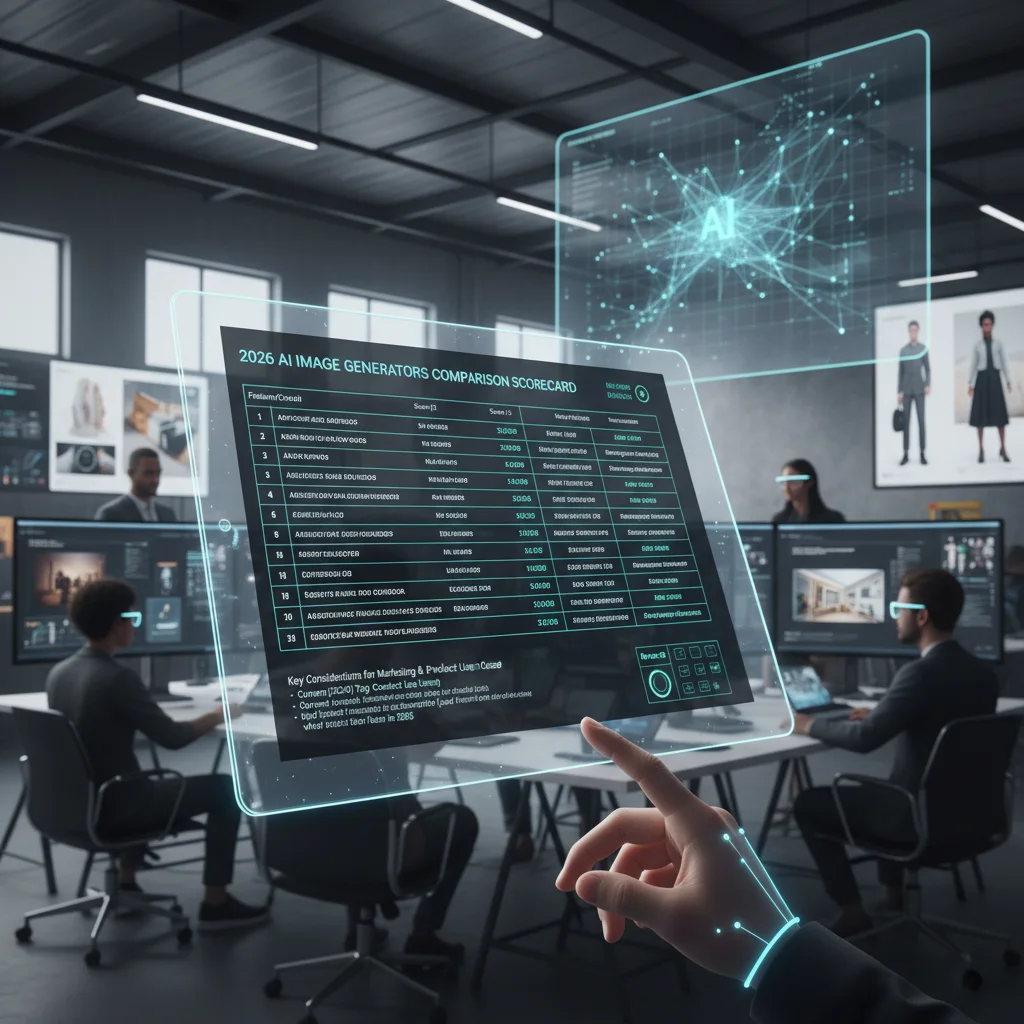
To determine which platforms truly earn the title of the best ai image generator 2026, we bypassed generic prompts and evaluated each tool on the exact tasks professional design and marketing teams perform daily. Our testing methodology focused on five core pillars:
- Marketing Campaign Visuals: The ability to generate high-resolution, emotionally resonant assets for social media, display ads, and landing pages.
- Product Photography & E-commerce Mockups: Placing products in realistic settings with accurate lighting, shadows, and reflections.
- Brand Consistency: Generating multiple assets that maintain the same color palette, character design, and stylistic direction.
- Text Rendering & Typography: Integrating legible, correctly spelled text into logos, packaging, and promotional graphics.
- Workflow Integration: How easily the tool fits into existing pipelines, including API availability, speed, and editing features.
Every output was analyzed by professional designers for usability, commercial safety, and the amount of post-processing required before client delivery.
Deep Dive: The Best AI Image Generator 2026 Options Ranked
The landscape has shifted dramatically. While early AI generators focused on abstract art, the current generation emphasizes control, photorealism, and text integration. Below is our ranked analysis of the top platforms currently available.
| Generator | Primary Strength | Text Quality | Commercial Safety | Best For |
|---|---|---|---|---|
| Flux (Black Forest Labs) | Photorealism & Prompt Adherence | Good | Medium-High | E-commerce & General Marketing |
| Midjourney | Artistic Quality & Aesthetics | Fair | Medium | Creative Concepting & Mood Boards |
| Ideogram | Typography & Graphic Design | Excellent | Medium | Logos, Posters & Social Graphics |
| Adobe Firefly | Indemnity & Brand Safety | Fair | High | Enterprise Commercial Campaigns |
| DALL-E 3 | Ease of Use & Ideation | Good | Medium | Rapid Prototyping via ChatGPT |
1. Flux (Black Forest Labs) – Best Overall for Commercial Use
Flux, developed by Black Forest Labs (featuring key minds behind Stable Diffusion), has solidified its position as the premier tool for professional creators. Offering variants like Flux 1.1 Pro and Flux 1.0, this model delivers an unmatched balance of photorealism, composition control, and prompt adherence.
In our testing, Flux consistently produced the most usable assets for commercial applications. When tasked with generating lifestyle product photography, it rendered realistic skin textures, natural fabric folds, and accurate lighting without the plastic "AI sheen" common in older models. Furthermore, its open-weights architecture allows enterprises to host the model locally or fine-tune it on proprietary brand assets, offering a level of customization that closed-source competitors cannot match.
Limitations: While Flux has made massive strides in text rendering, it can still struggle with complex, multi-sentence layouts. Additionally, its default style is highly realistic, meaning creators looking for abstract or highly stylized artistic outputs may need to spend more time crafting complex prompts.
2. Midjourney – Best for Creative and Conceptual Work
For projects where artistic direction, mood, and visual impact are paramount, Midjourney remains the undisputed leader. It excels at translating abstract concepts into breathtaking, highly stylized visuals that look like they were crafted by a high-end creative agency.
During our creative testing, Midjourney outperformed all other models in generating conceptual art, editorial fashion layouts, and cinematic environments. It is the perfect tool for the early stages of a project—such as building mood boards, exploring aesthetic directions, and pitching creative concepts to clients. The platform's "Style Tuner" and consistent character features provide designers with deep control over the visual narrative.
Limitations: Midjourney's primary drawback is its workflow friction. The lack of a robust, official API makes it difficult to integrate into automated enterprise pipelines. Additionally, its tendency to apply a distinct "Midjourney style" can make it challenging to match strict, minimalist brand guidelines, and its text rendering capabilities remain behind dedicated typography tools.
3. Ideogram – Best for Text and Typography
Ideogram has solved one of the most persistent issues in generative AI: rendering clean, accurate, and beautifully styled text. For graphic designers, social media managers, and packaging designers, Ideogram is an indispensable asset.
Our testing showed that Ideogram is the only generator that reliably handles complex typography, nested text, and stylized logos on the first try. Whether you need a vintage poster with a specific headline, a product label with clear branding, or a social media graphic with a bold call-to-action, Ideogram delivers crisp vector-like text that requires minimal cleanup. Its latest model also boasts impressive prompt adherence and overall image quality, making it a strong general-purpose tool as well.
Limitations: While its graphic design capabilities are unmatched, Ideogram's photorealism and organic textures (such as human skin or complex natural landscapes) are slightly less convincing than those produced by Flux.
4. Adobe Firefly and DALL-E 3
For specific corporate environments, other tools offer unique advantages that make them highly competitive:
- Adobe Firefly: Firefly is the industry standard for legal safety. Trained exclusively on licensed Adobe Stock images and public domain content, Adobe offers commercial indemnification for enterprise users. It integrates directly into Creative Cloud applications like Photoshop and Illustrator, making it a natural fit for existing design workflows, even if its raw creative output is sometimes more conservative than Midjourney or Flux.
- DALL-E 3: Accessible directly within ChatGPT Plus and Microsoft Copilot, DALL-E 3 is the most user-friendly tool for rapid prototyping. It excels at understanding conversational prompts and translating complex ideas into clean, illustrative styles. While it lacks the advanced fine-tuning controls of Flux, it is an excellent tool for non-designers who need to quickly visualize concepts during brainstorming sessions.
Choosing the Best AI Image Generator 2026 for Your Specific Workflow
Selecting the right platform depends entirely on your team's output requirements, technical capabilities, and legal constraints. Rather than searching for a single magic tool, successful agencies build a modular stack that leverages the unique strengths of each platform.
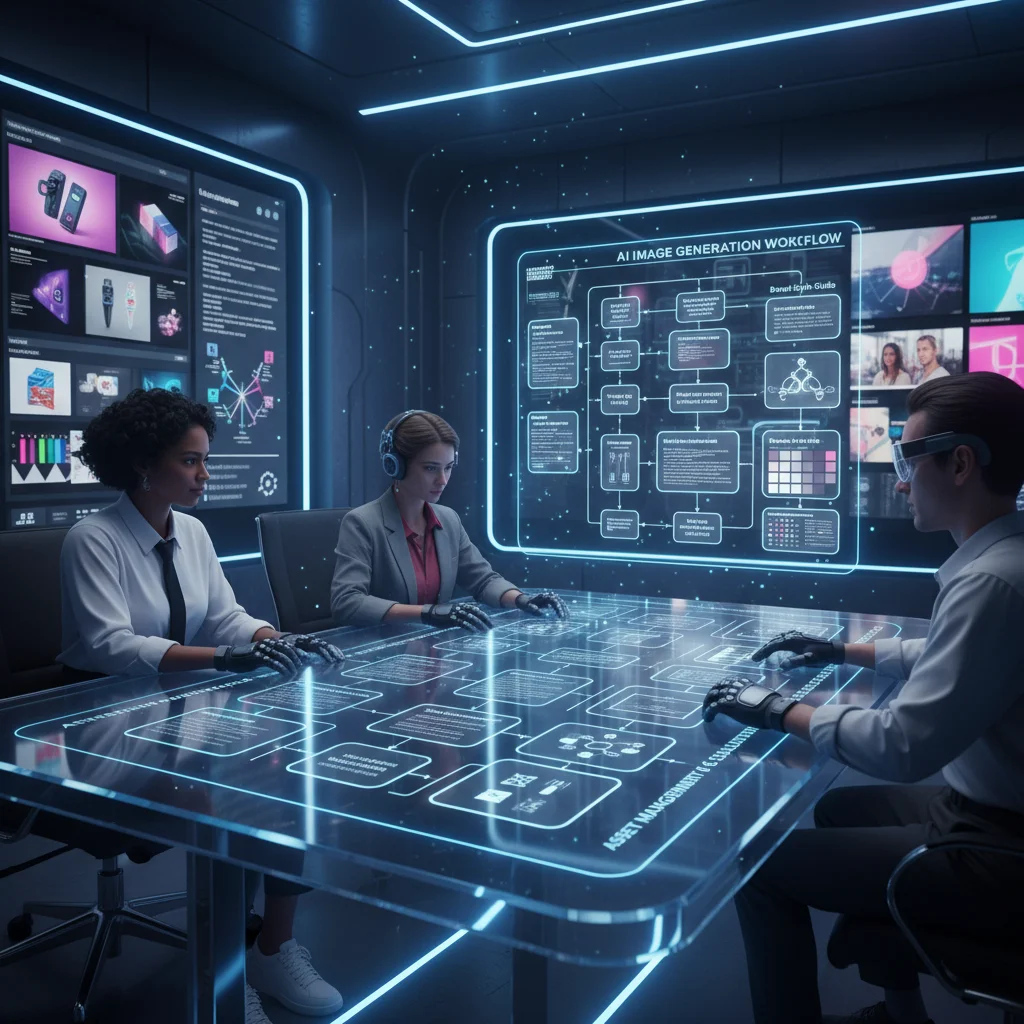
To maximize efficiency and output quality, we recommend implementing a structured, multi-tool workflow:
- Conceptualization & Ideation: Use Midjourney to explore creative directions, establish mood boards, and generate high-impact visual concepts.
- Asset Production: Use Flux for photorealistic product placements, lifestyle imagery, and brand-consistent marketing assets. If legal safety is your primary concern, substitute Adobe Firefly for this step.
- Typography & Layout: Use Ideogram to generate any assets that require integrated text, such as social media templates, event posters, or packaging mockups.
- Human Refinement: Import the generated assets into professional design software (like Photoshop or Figma) for color correction, compositing, and final brand alignment.
Even the most advanced models require human oversight. In professional settings, expect to allocate 20% to 50% of your project timeline to manual editing, upscaling, and quality assurance. This ensures that the final deliverables are polished, legally compliant, and perfectly aligned with your brand identity.
Related reading: Flux vs Midjourney vs DALL-E 3 vs Ideogram 2026 – Which · Best Image Tools for Text · Best Image Workflow for Designers