How We Tested These AI Image Generators Head-to-Head in 2026
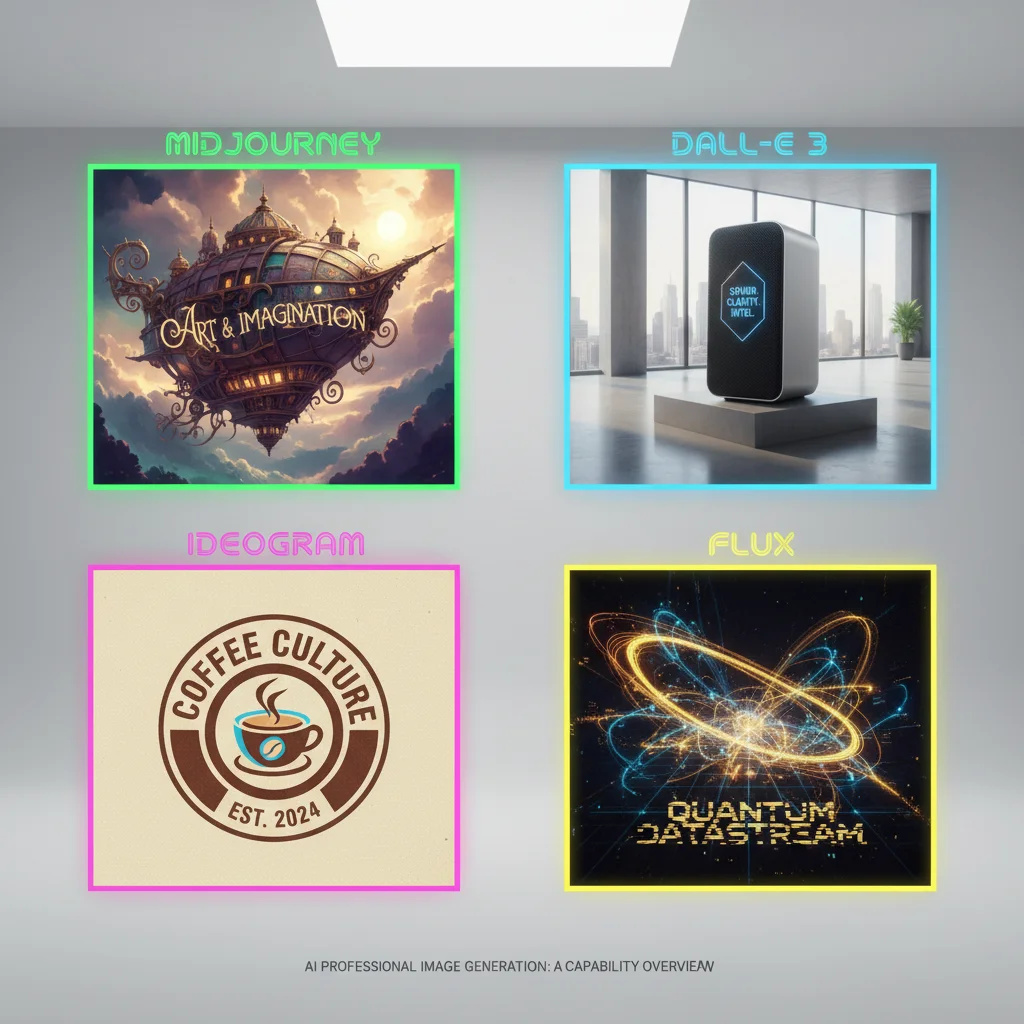
We tested Flux, Midjourney, DALL-E 3, and Ideogram on identical professional image generation prompts across multiple categories:
- Product photography and e-commerce mockups
- Marketing campaign visuals and social media assets
- Images with text (logos, social graphics, headlines)
- Creative and conceptual work
- Brand-consistent imagery across multiple generations
All output was evaluated by professional designers and marketers for usability, brand safety, commercial viability, and how much editing was required to make it client or customer-ready. We measured actual time savings and quality outcomes, not just aesthetic appeal.
1. Flux – Best Overall for Photorealism and Professional Commercial Work
Flux (particularly Flux 1.1 Pro and Flux 1.0) is currently the best all-around AI image generator for most professional marketing, product, and commercial use cases.
In our side-by-side testing, Flux produced the highest quality, most usable output for the majority of real-world professional applications. It excelled at: - Photorealistic product photography and lifestyle imagery - Clean, professional marketing visuals - Consistent brand-style imagery across multiple generations - Good prompt adherence and composition
Flux is the tool that most professional designers and marketers should reach for first in 2026 for the majority of their AI image generation needs.
Limitations: Text rendering is still not as good as Ideogram, and it is not the most creative/artistic option (Midjourney is better for highly stylized or conceptual work).
2. Midjourney – Best for Creative, Artistic, and Conceptual Work
Midjourney remains the best choice for creative, artistic, and highly stylized image generation where creative quality and aesthetic impact matter more than photorealism or commercial usability.
In our testing, Midjourney excelled at: - Conceptual and artistic imagery - Highly stylized marketing concepts - Mood boards and creative exploration - Unique, distinctive visual styles
Many creative teams and agencies use Midjourney as their primary tool for the conceptual and creative phases of projects, then move to Flux or other tools for final production assets.
Limitations: Text rendering is poor, photorealism is not as strong as Flux, and the artistic style can be too distinctive for some brand guidelines.
3. Ideogram – Best for Any Work That Requires Text in Images
Ideogram is the essential tool for any professional work that requires clean, readable text in generated images (logos, social media graphics, presentations, marketing materials with headlines, packaging mockups, etc.).
In our testing, Ideogram was the only tool that reliably produced clean, readable, properly spelled text in generated images. Flux and Midjourney have improved but still lag significantly behind Ideogram on text rendering quality.
Any professional team that regularly needs images with text should have Ideogram in their toolkit, either as a primary tool or as a specialized tool for text-heavy generations.
Limitations: Image quality and prompt adherence are generally not as strong as Flux for non-text elements, so it is often used in combination with other tools.
4. DALL-E 3 – A Reasonable All-Around Alternative with Accessibility Advantages
DALL-E 3 (via ChatGPT or Bing) is a reasonable alternative for general use, with good prompt adherence and decent quality. It is not the best at any specific thing, but it is competent across the board and easily accessible for teams already using ChatGPT.
In our testing, DALL-E 3 performed well on general marketing and lifestyle imagery but lagged behind Flux on photorealism and prompt adherence, and behind Ideogram on text rendering. It is a reasonable choice for teams that want a single, easily accessible tool for general use.
Limitations: It is not the best at photorealism (Flux is better), creative quality (Midjourney is better), or text rendering (Ideogram is better). It is a jack-of-all-trades, master of none.
5. Practical Recommendation: Matching the Tool to the Use Case in 2026
Based on our testing:
- General marketing, product photography, lifestyle imagery: Flux (best quality and usability)
- Creative and conceptual work, mood boards, artistic exploration: Midjourney (best creative quality)
- Any work with text (logos, social graphics, headlines, presentations): Ideogram (only viable option for clean text)
- Brand-safe commercial work with licensing concerns: Adobe Firefly (safest for commercial use)
- General use, teams already in OpenAI ecosystem: DALL-E 3 (reasonable all-around alternative)
Most professional teams end up using 2-3 of these tools depending on the specific use case, with human editing and refinement on almost all AI-generated images before they are used in client or customer-facing work.
Frequently Asked Questions
Which AI image generator is best for professional marketing and commercial work in 2026?
Flux is currently the best all-around AI image generator for most professional marketing, product, and commercial use cases. It produces the highest quality, most usable output for the majority of real-world professional applications. Midjourney is better for creative and conceptual work, and Ideogram is essential for any work that requires clean, readable text in images.
Which AI image generator is best for creating images with text?
Ideogram is currently the clear leader for any professional work that requires clean, readable text in generated images (logos, social media graphics, presentations, marketing materials with headlines). Flux and Midjourney have improved but still lag significantly behind Ideogram on text rendering quality.
Is Midjourney still worth using in 2026?
Yes, for creative and conceptual work. Midjourney remains the best choice for artistic, conceptual, and highly stylized images where creative quality matters more than photorealism or commercial usability. For marketing, product photography, or any work that needs to look realistic or professional, Flux is generally better.
Which AI image generator should I start with?
Start with Flux for most professional marketing and product work. Add Midjourney if you do a lot of creative and conceptual work. Add Ideogram if you regularly need images with clean, readable text. Most professional teams end up using 2-3 of these tools depending on the specific use case.
How much human editing is still required for AI-generated professional images?
Almost all AI-generated images used in professional work in 2026 require some level of human editing and refinement before they are client or customer-ready. Even the best tools produce images that benefit from color correction, composition adjustments, and brand alignment. Expect to spend 20-50% of the total project time on human editing and refinement, depending on the use case and quality requirements.
How We Tested These AI Image Generators Head-to-Head in 2026
The professional teams getting the best results from AI image generation in 2026 are not the ones using a single tool for everything. They are the ones matching the right tool to each use case (Flux for general marketing/product work, Midjourney for creative concepts, Ideogram for text-heavy images) and applying human editing and brand safety review before using any AI-generated image in client or customer-facing work. Expect to spend 20-50% of the total project time on human editing and refinement. No AI image generator in 2026 can be trusted to produce final, client-ready images without human review and editing.